Straight and offset
A straight lay is clean and efficient, and an offset adds a classic brick feel. Planks look best with a modest offset.
Aligned joints suit modern rooms.
Both are friendly to a first project.
Herringbone and chevron
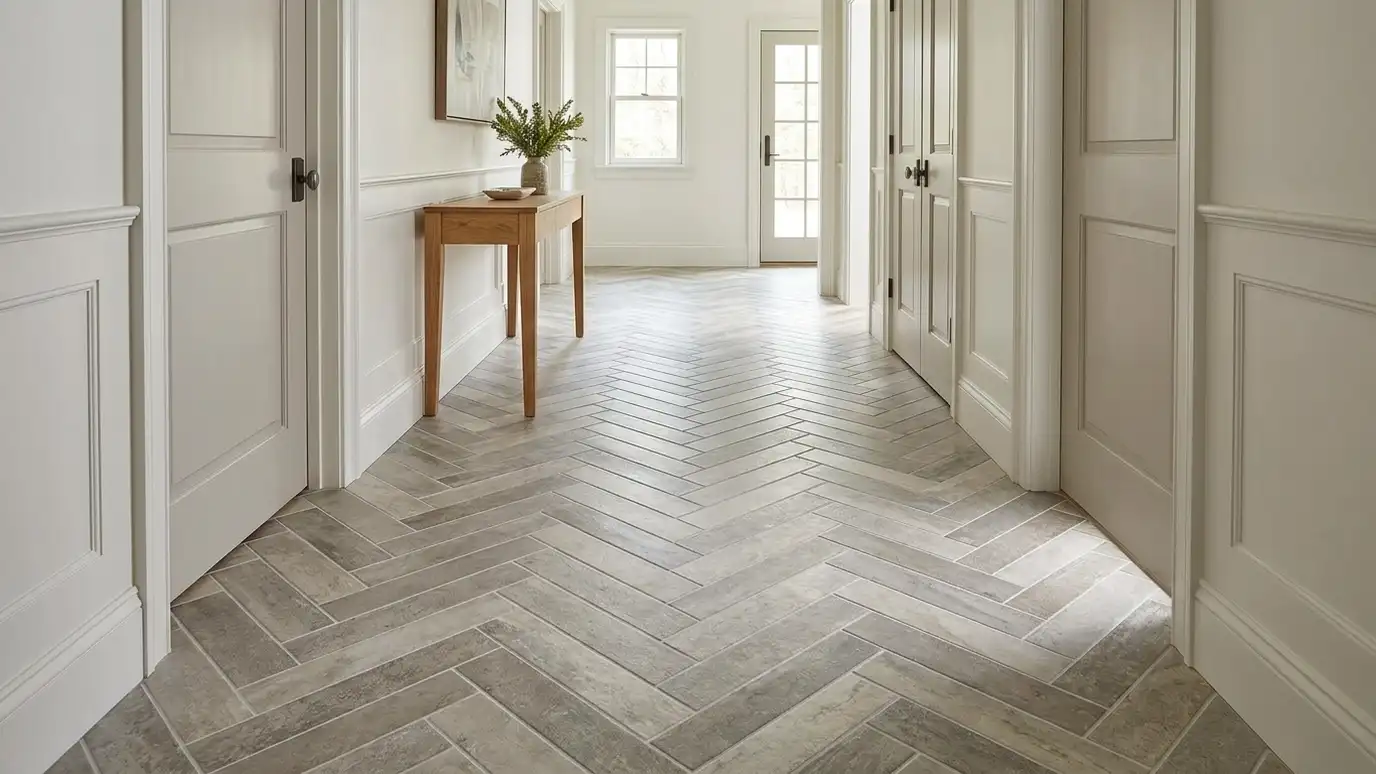
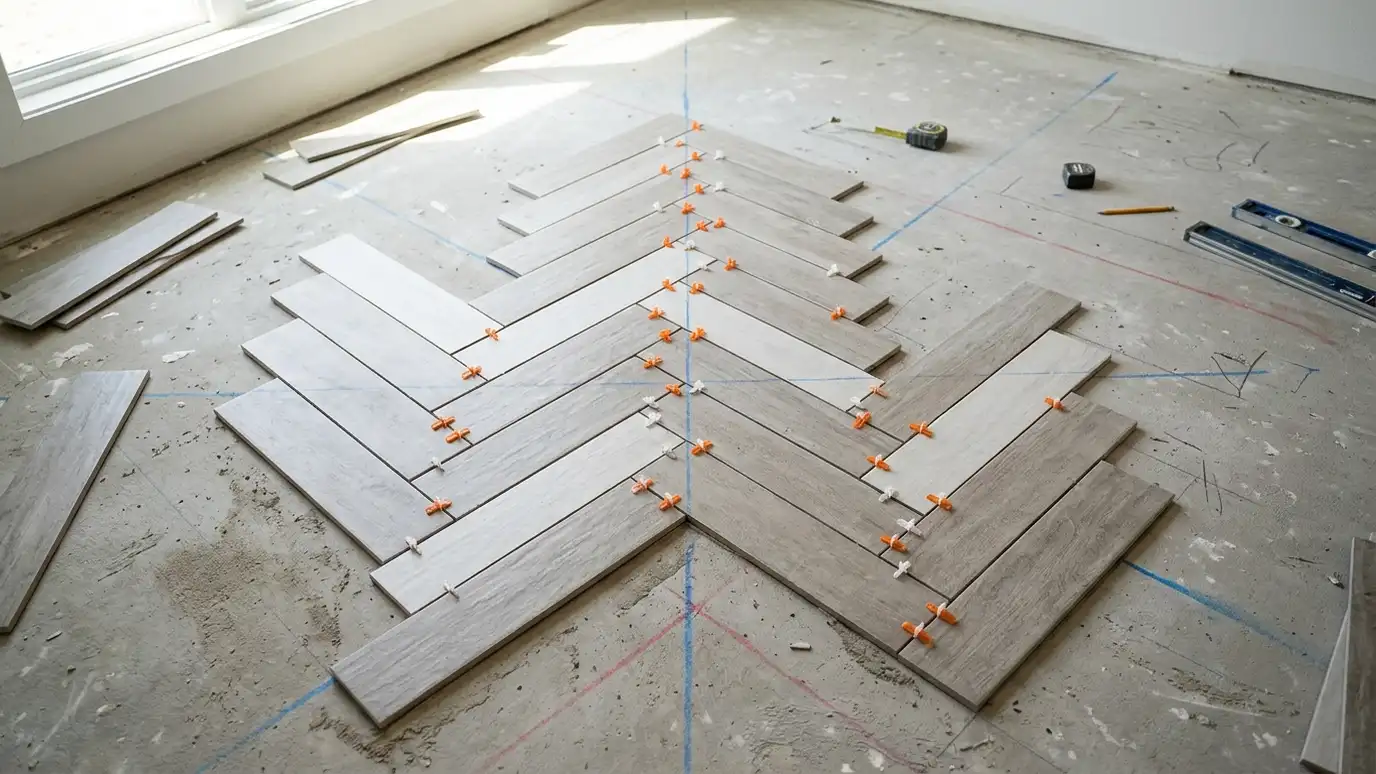
Herringbone and chevron give a custom, rich look and need careful cutting. Rectangular tile with a ratio of about two to one works well.
Layout lines start from the most visible spot.
Plan extra tile for cuts.
Diagonal and large format
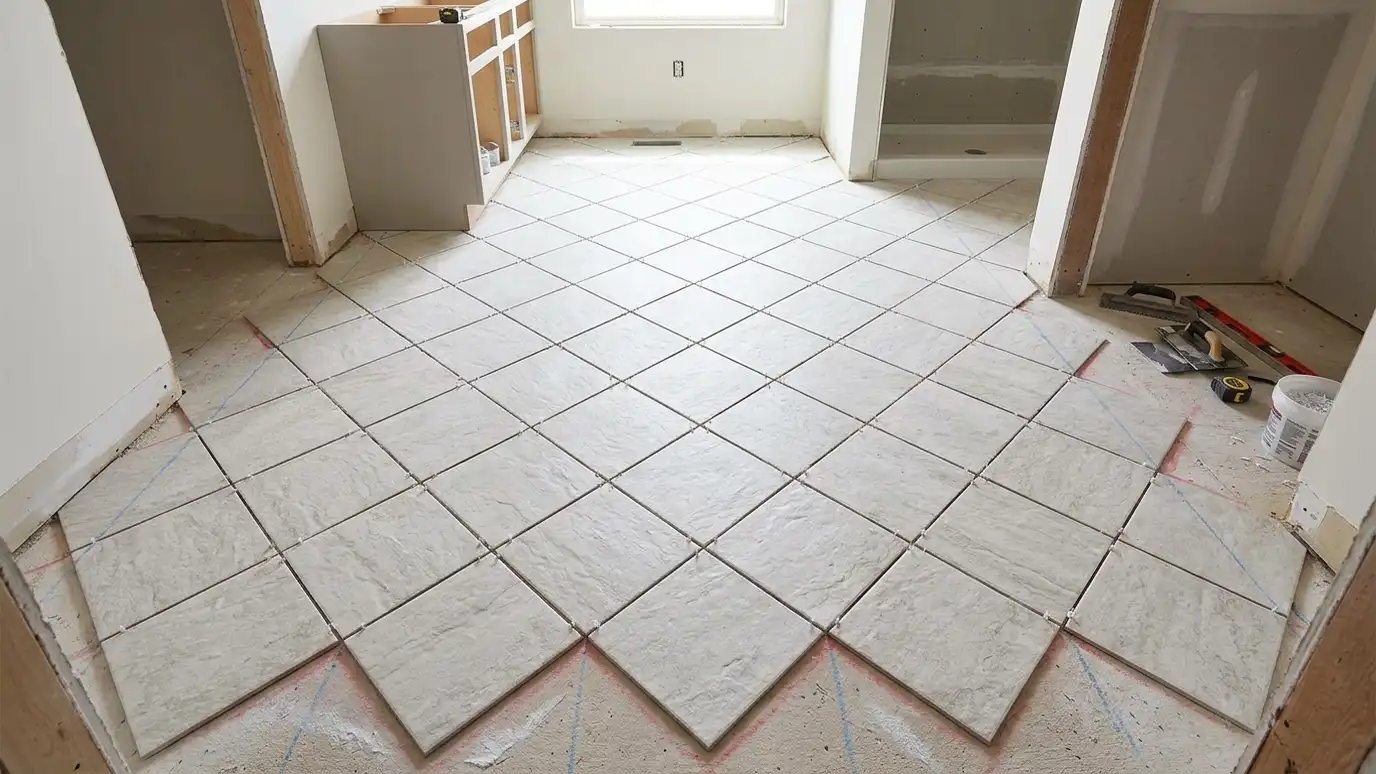
A diagonal lay makes a room look wider and hides small wall variations, with more waste. Large tile gives a calm, open look with fewer joints.
Large tile needs a very flat floor.
We check flatness before choosing size.
Borders and accents
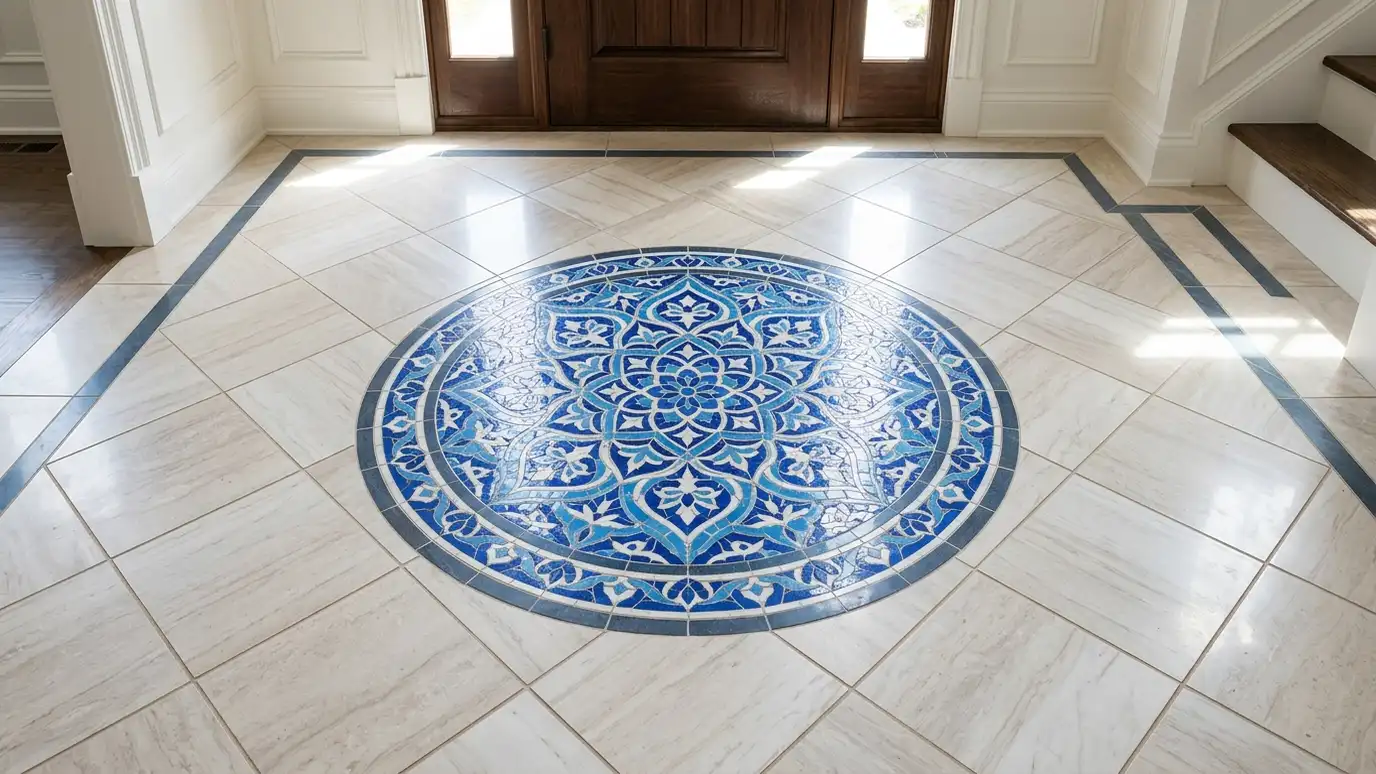
A border frames a room, a medallion marks the center and a feature strip adds rhythm. Keep accents modest so they do not compete.
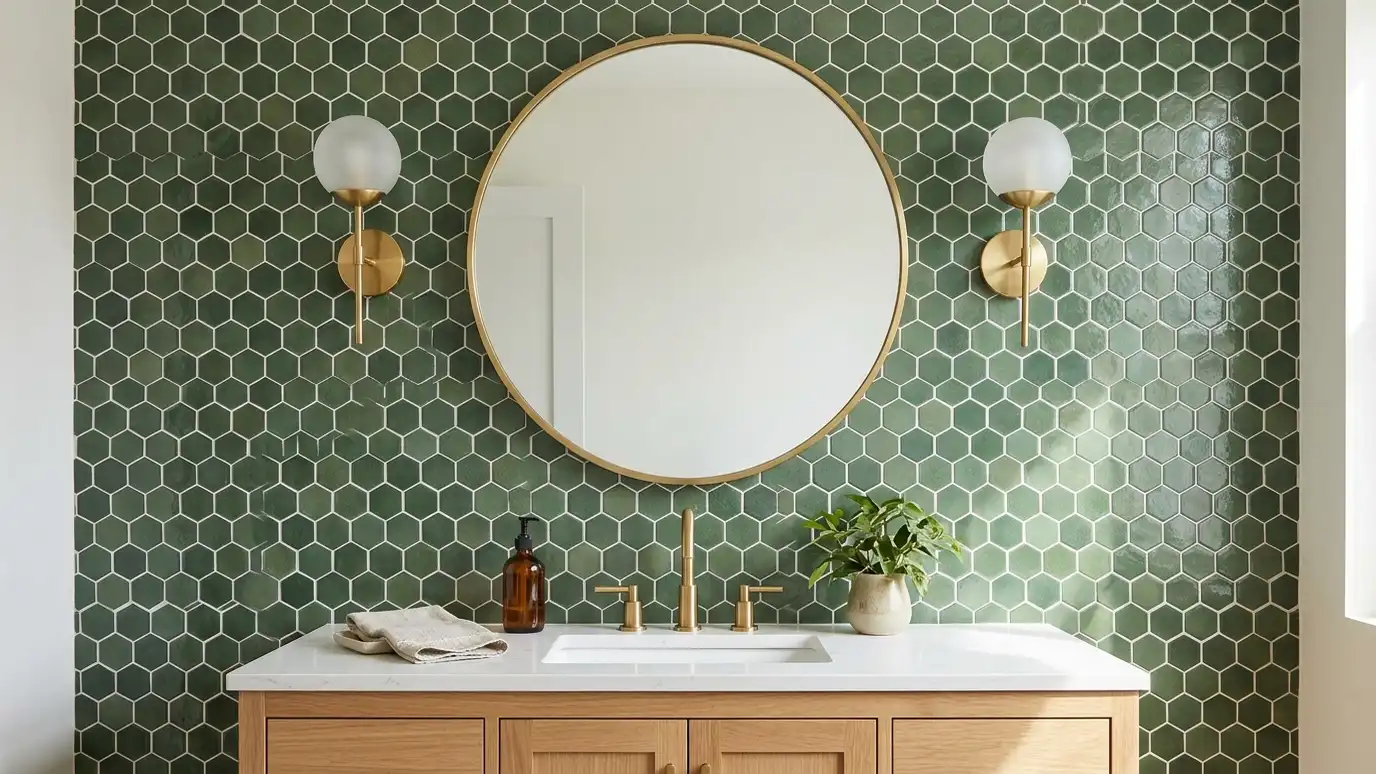
Mosaic accents suit niches and backsplashes.
Test the look with a dry-lay.
Starting lines and cuts
A layout starts from a visible, defined line, such as a doorway or a focal wall, and balances cuts at the edges. Thin slivers at walls look unintentional.
We dry-lay a section and adjust.
Small shifts change the whole result.
Direction and light
Tile direction can lengthen or widen a room, and light changes how joints look. Glossy tile shows lippage more than matte.
Plan around windows and fixtures.
Take photos of dry-lays at different times.
Dry-lay the pattern before mortar goes down, and start from the spot people see first.