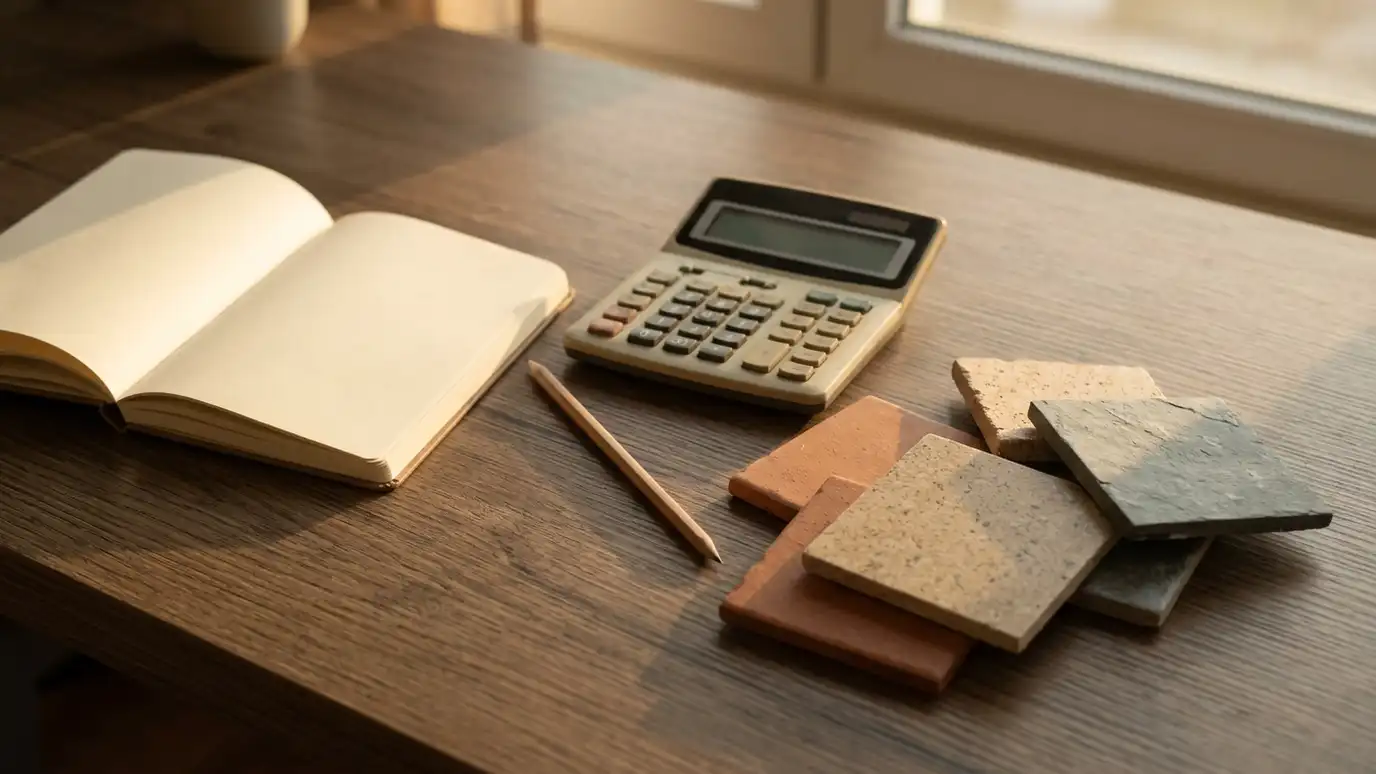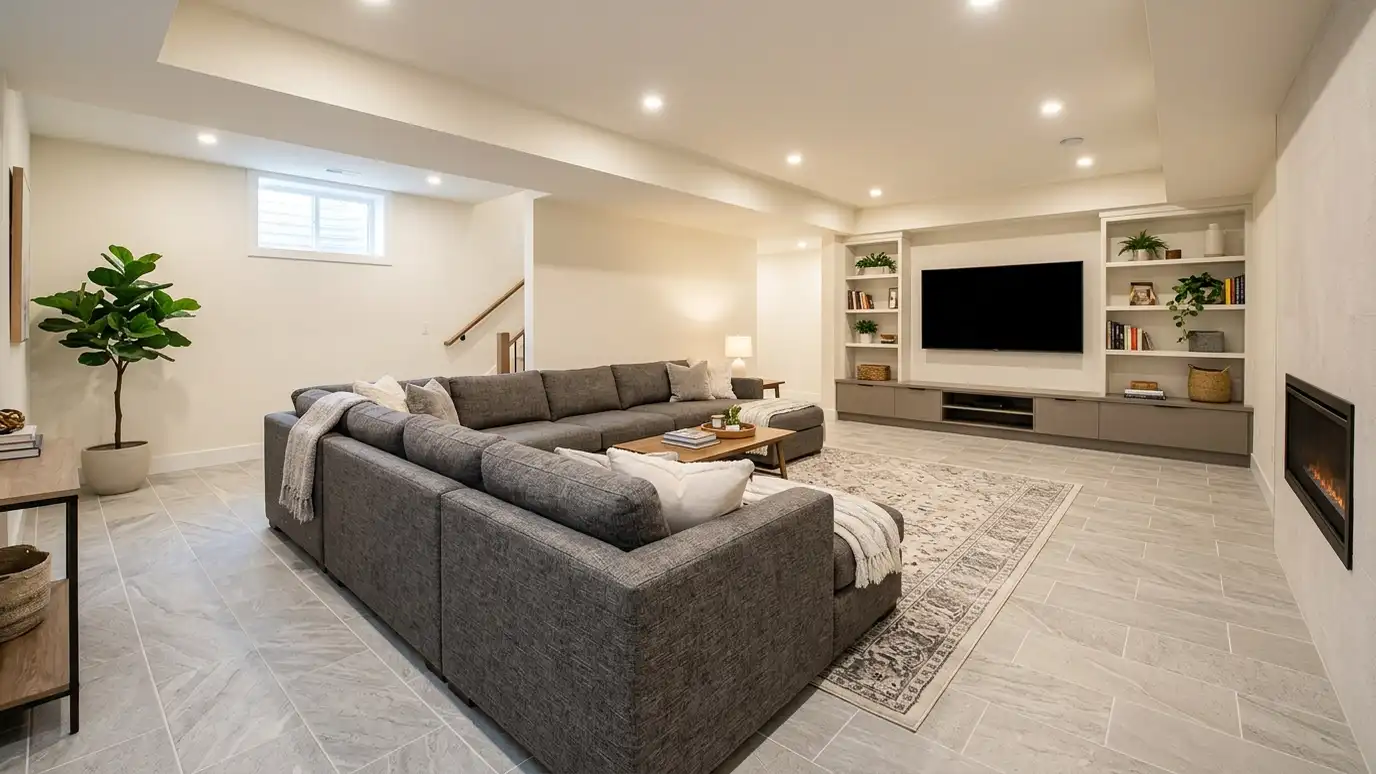
Basement tile floors set over concrete with moisture testing, crack protection and a tile choice that handles cool slabs and the occasional damp day.
A basement floor sits on or near the ground, and that changes the rules. Concrete slabs can carry moisture, hairline cracks and uneven spots, and the space can feel cool in winter. Homeowners in Nashville who finish a basement often choose tile because it handles humidity better than many other floor coverings. The key is to test the slab and prepare it, not just cover it.
We start by checking for moisture and by looking at cracks and levels. A moisture test shows whether the slab needs a vapor-control layer before tile. Cracks get an isolation membrane so they are less likely to telegraph through the tile. If the floor is uneven, we level it first. Then we help you choose a porcelain tile that looks good in basement light and grips when damp, and we discuss heated floors, which make a basement feel much more comfortable. Take photos of any water stains, white powder or damp spots on the slab or the walls. Note whether a sump pump or a dehumidifier runs. This information helps us decide on moisture testing and whether tile is the right choice right now or after other repairs.
Moisture checked before tile.
Isolation layer over hairline cracks.
Uneven areas smoothed first.
Radiant heat makes basements comfortable.
Drag the handle to compare.
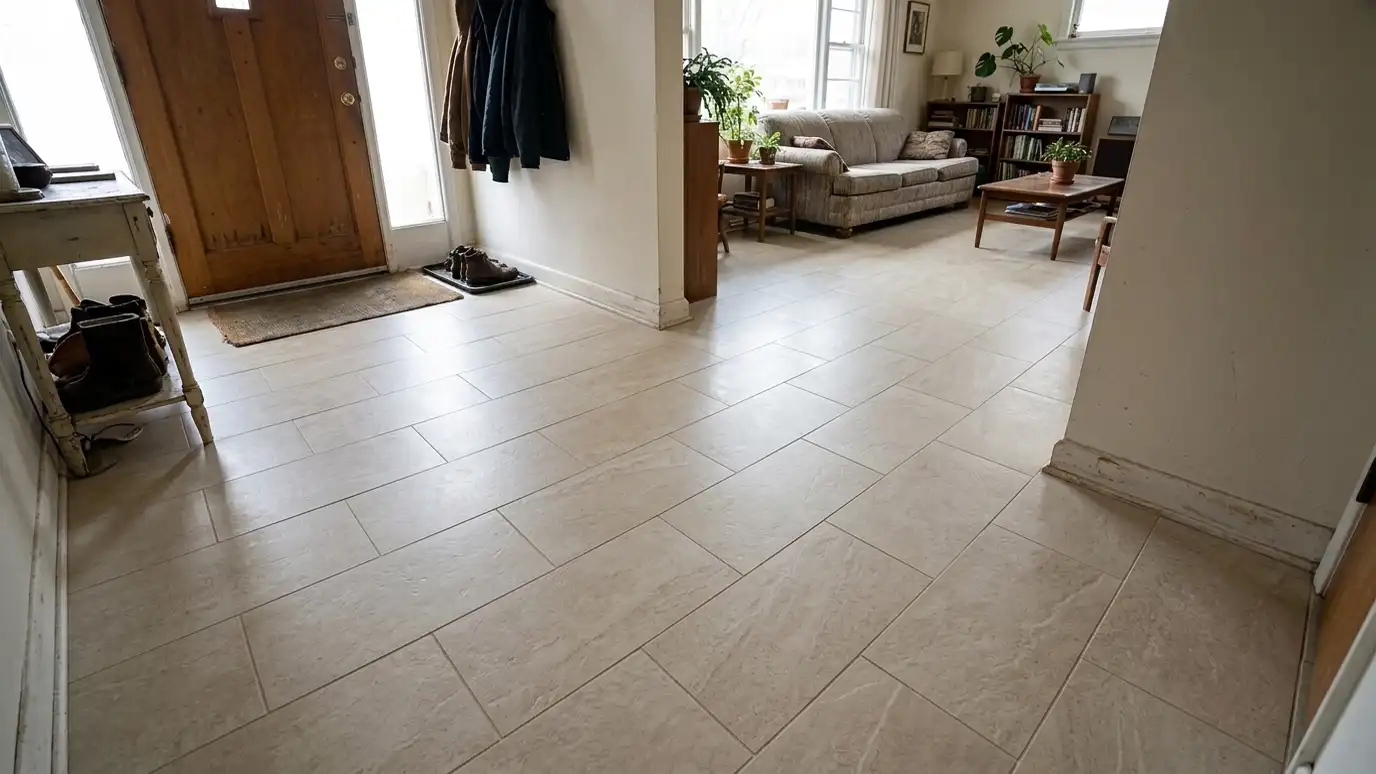
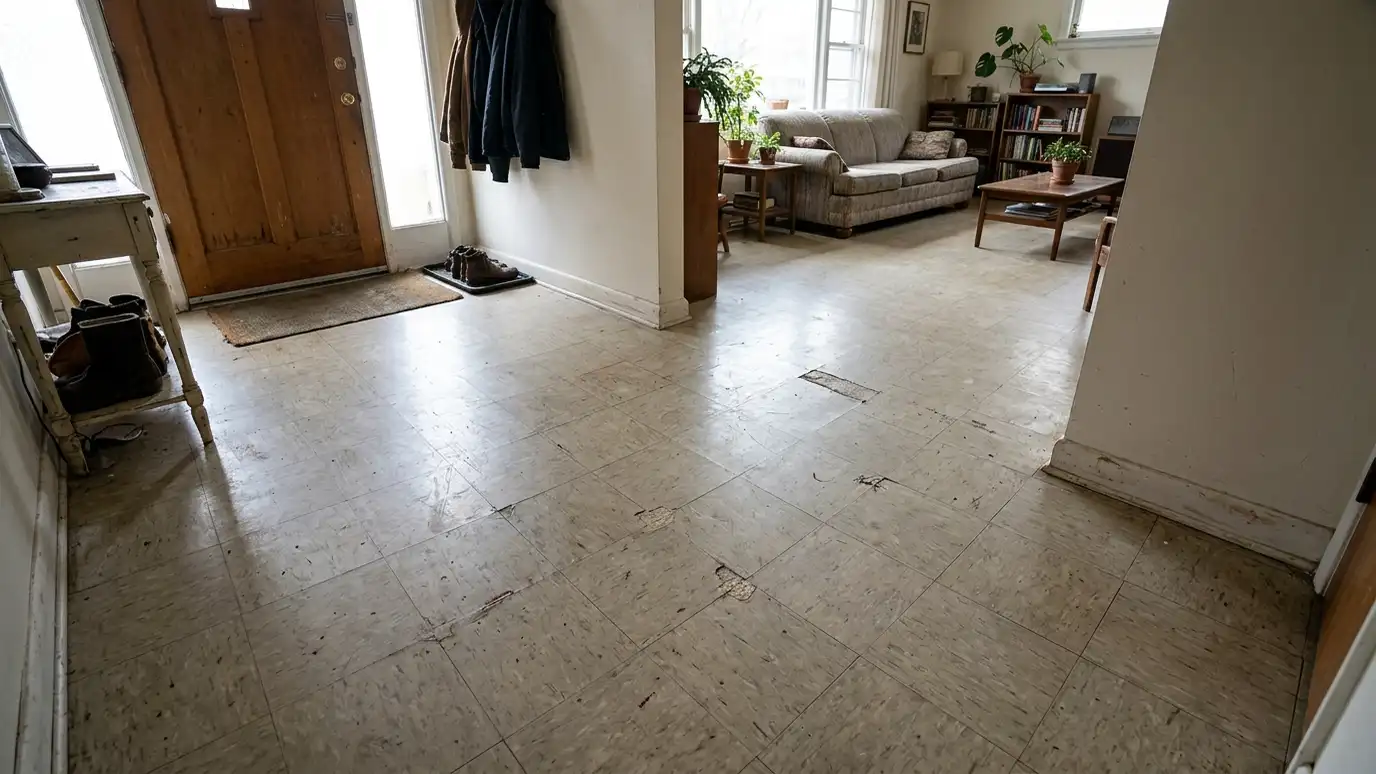 BeforeAfter
Slabs checked before tile.
Isolation layer over existing cracks.
Uneven areas smoothed first.
Porcelain that handles humidity.
Radiant heat for comfort.
Prep steps written into the scope.
Every topic has its own page with what to expect and how we approach it.
 Comparison guideFloor Prep and LevelingWhy tile needs a flat, clean, sound base, how flatness is checked and how leveling compounds and grinding…Learn more
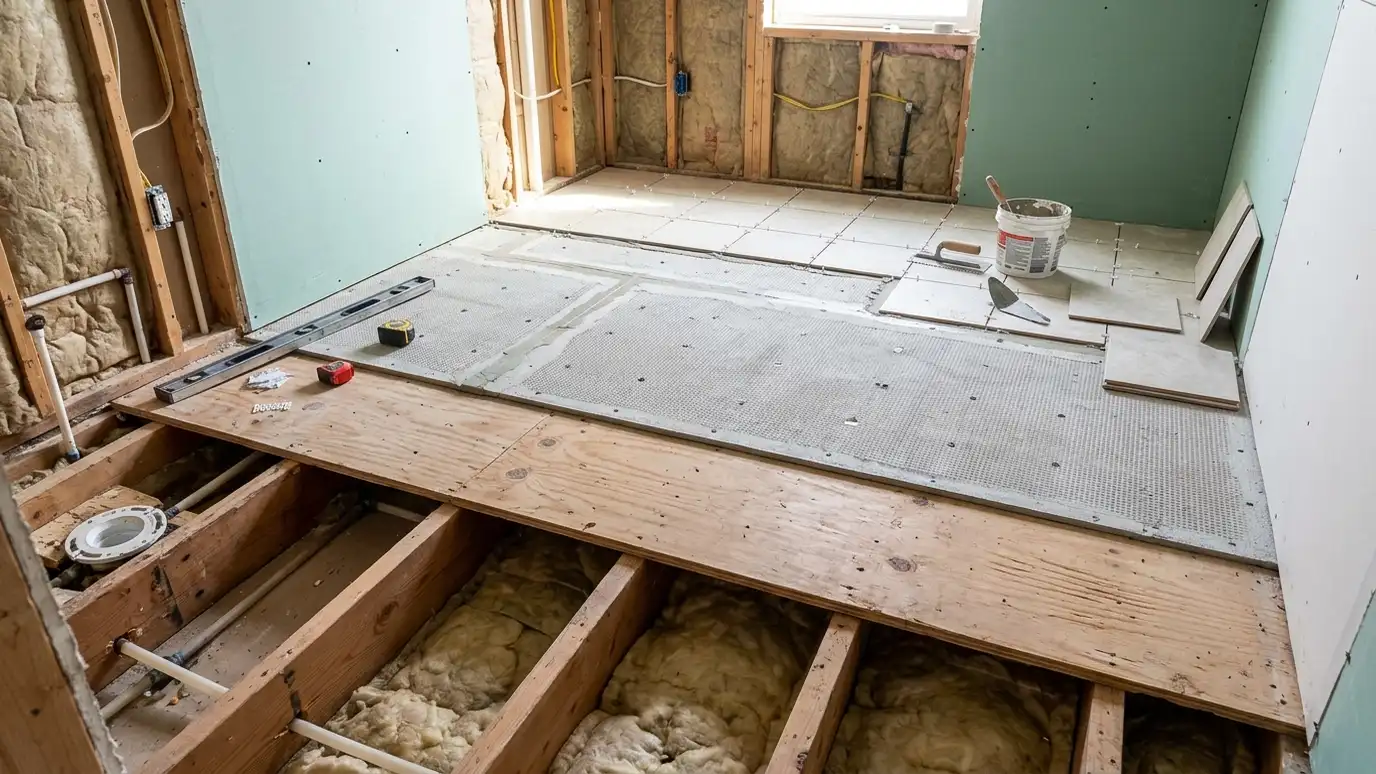 Comparison guideSubfloors and UnderlaymentWhy a stiff subfloor matters for tile, what deflection means and how underlayments and uncoupling layers support floors.Learn more
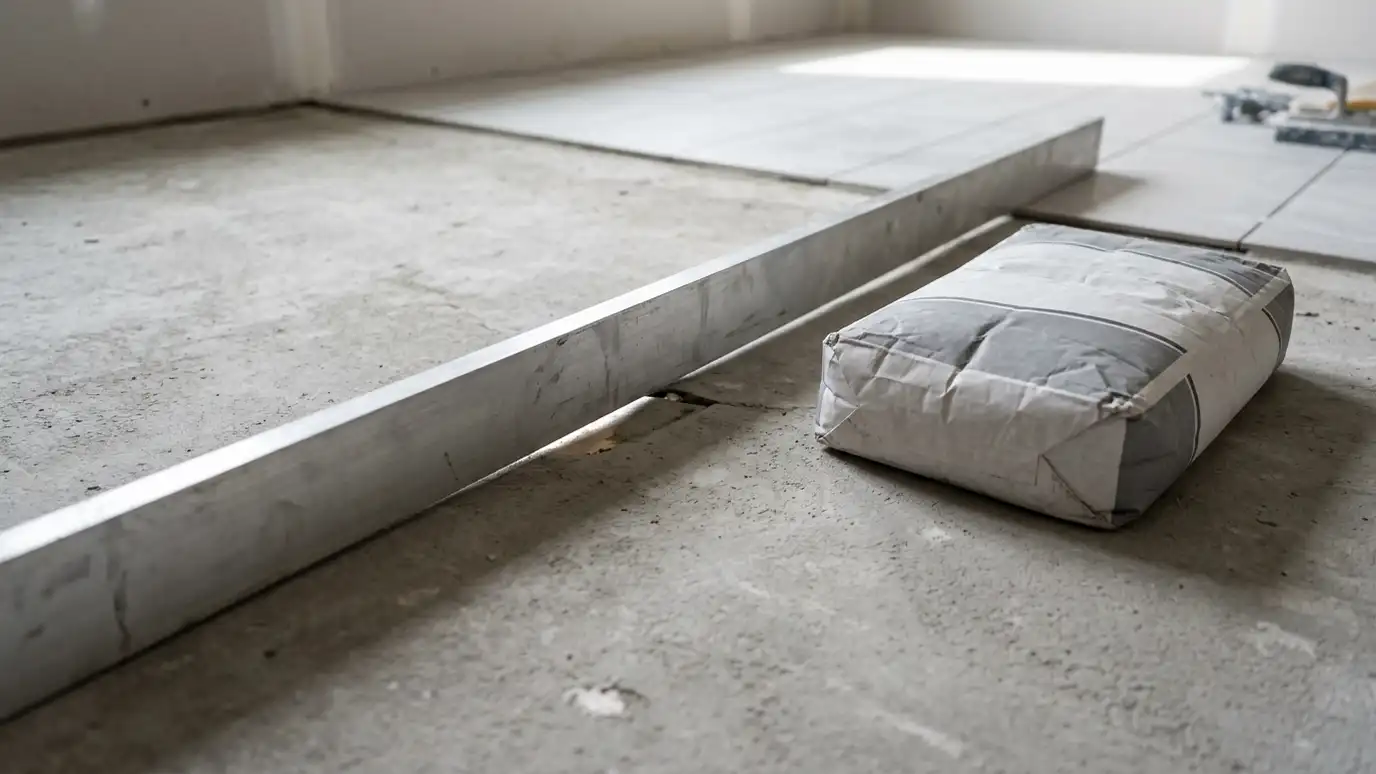
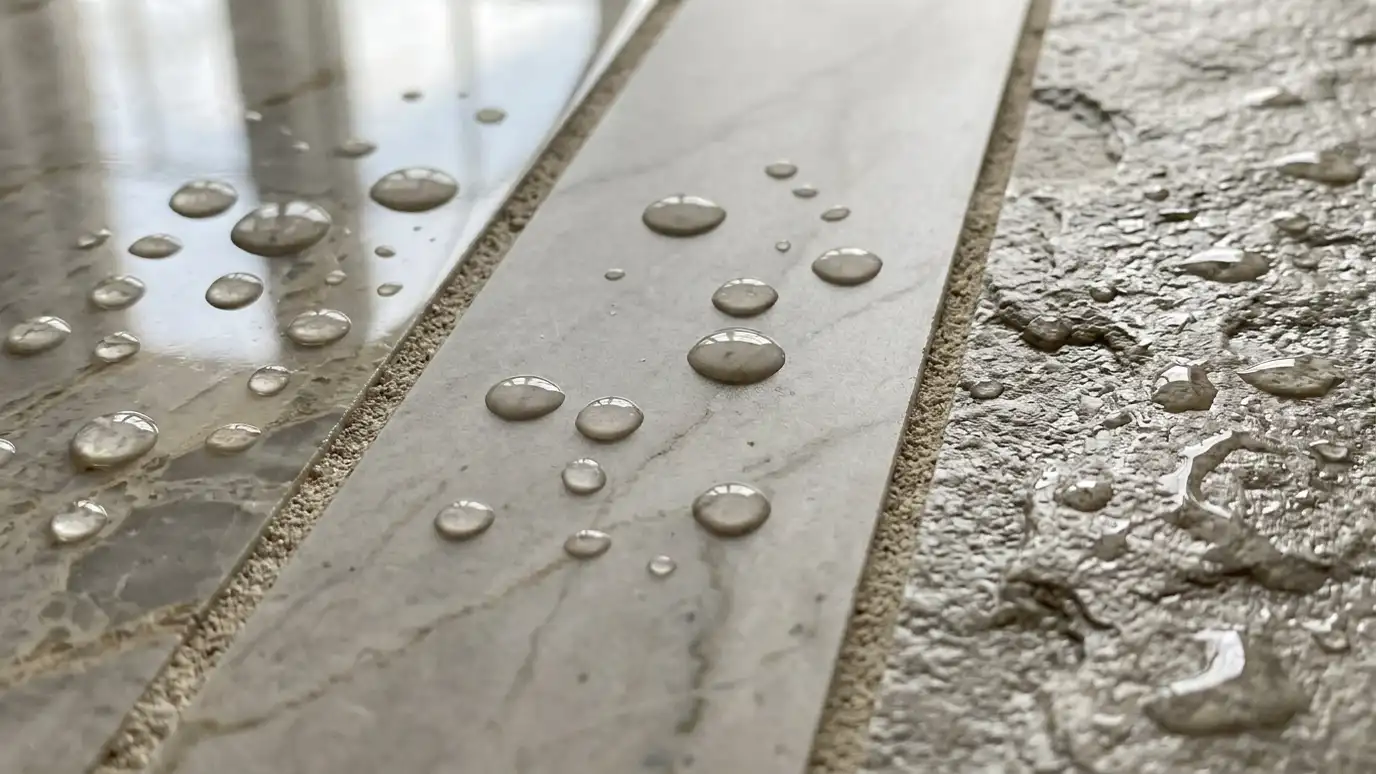 Comparison guideSlip Resistance and FinishHow polished, honed, matte and textured finishes differ, what traction ratings mean and where grip matters most.Learn more
Pick the space and the conditions to see which tile format, grout joint and finish usually fit, with notes on flatness and grip.
You tell us the rooms, the tile you like and your timing, and we ask about the floors, walls and any water issues.
We check flatness, moisture and layout from photos or a visit and talk through materials, pattern and trim.
You get a plain written scope with prep, waterproofing, materials, schedule and cure times before anything is ordered.
Old tile comes out, floors are repaired and leveled, backer board and membranes go in and showers are waterproofed and tested.
Tile is set with the right mortar, checked for flatness and alignment and cut carefully at the edges.
We grout, seal and caulk, clean up and walk the finished job with you, leaving written care tips and extra tile.
Yes, after the slab is tested and prepared for moisture, cracks and flatness.
We find the source first. Tile does not fix a water problem, so address leaks and drainage before finishing.
Tile is cool, but heated floors and rugs make it comfortable.
They can. An isolation membrane reduces the chance.
It depends on the test results. We explain what the slab needs.
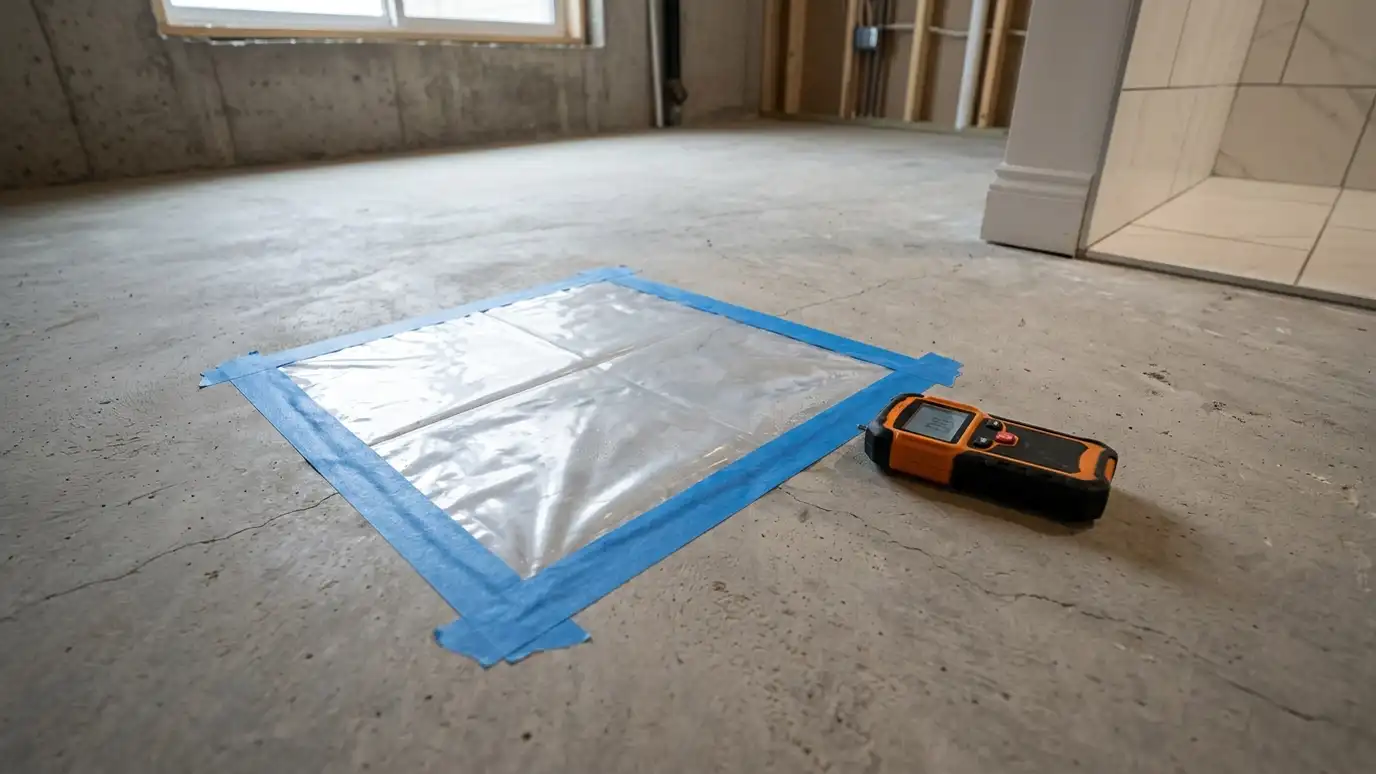 Moisture TestingMoisture testing and vapor control for concrete slabs and basements, with simple tests and vapor barriers so moisture…Explore
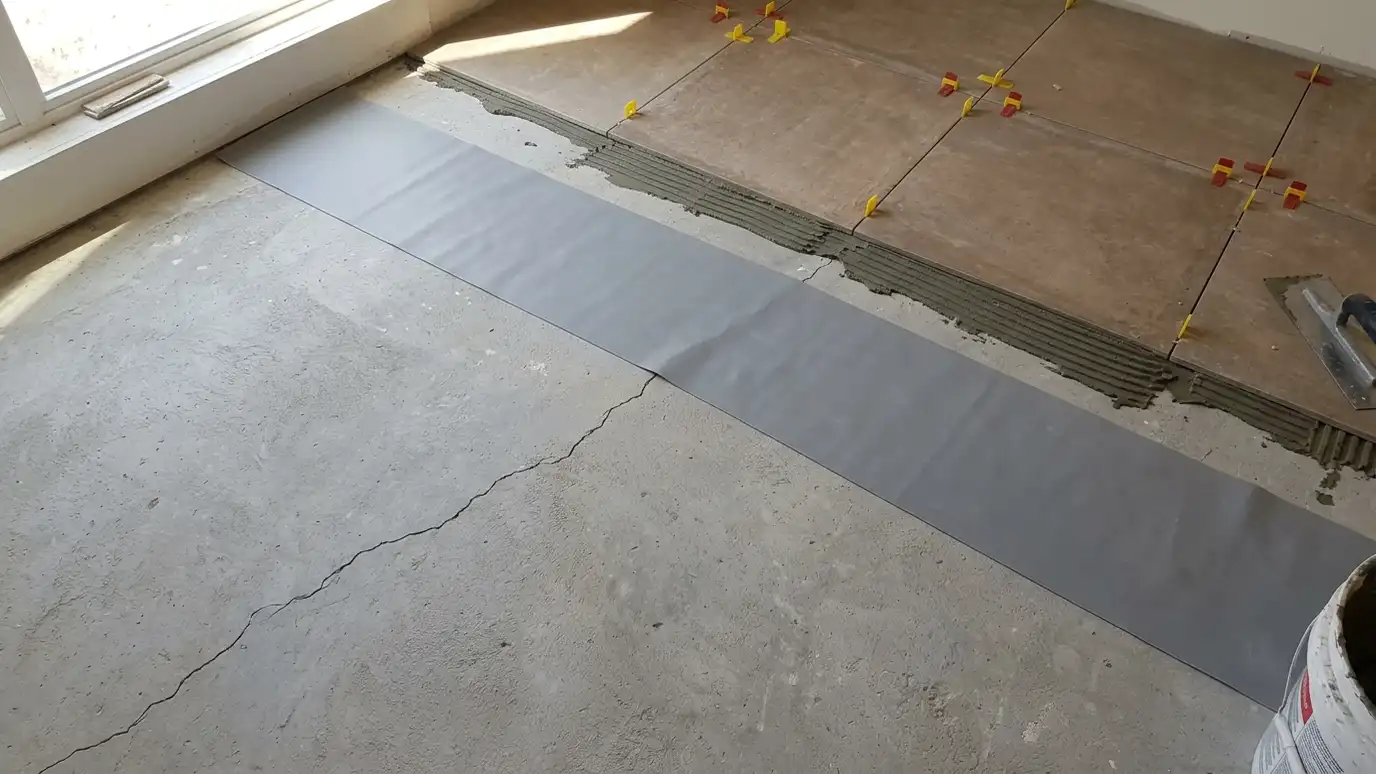 Crack IsolationCrack isolation membranes that bridge hairline cracks and small movements in concrete so they are less likely to…Explore
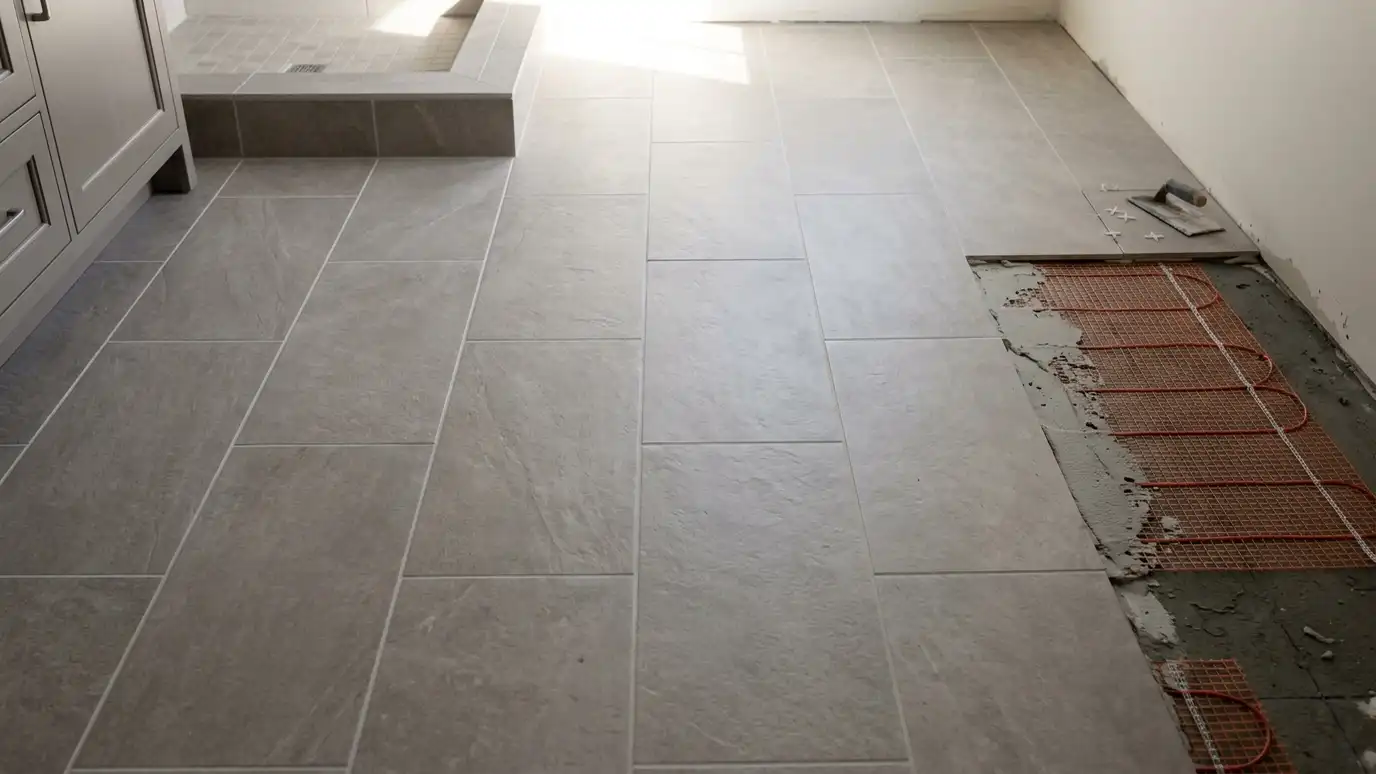 Heated FloorsHeated tile floors with electric mats or cables set under tile, a floor sensor and a thermostat, coordinated…Explore
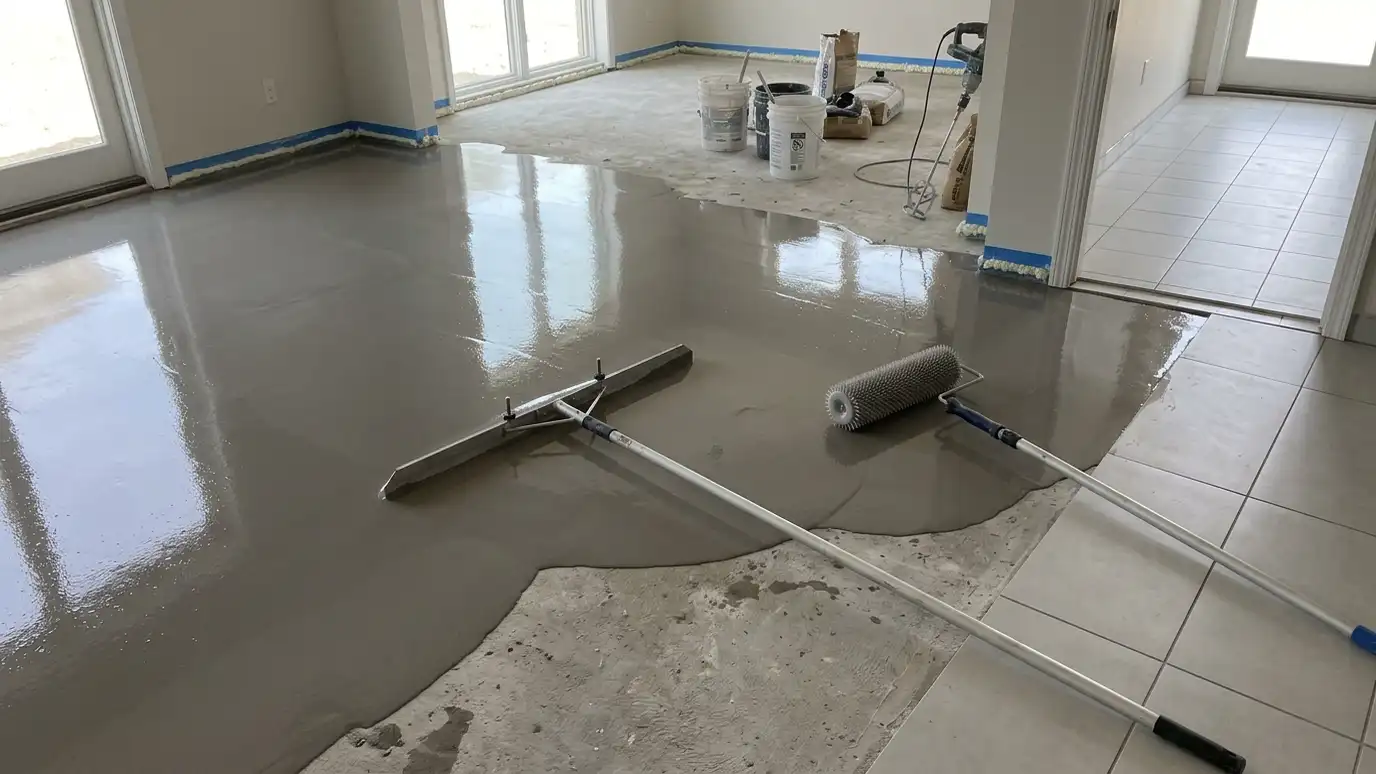 Floor Prep and LevelingFloor prep and leveling that makes concrete and wood subfloors flat, clean and ready for tile, using grinding…Explore
Tell us about your project and we will call you back to set up a visit.
Or call (615) 357-7797 to talk now.