Choose outdoor-rated tile
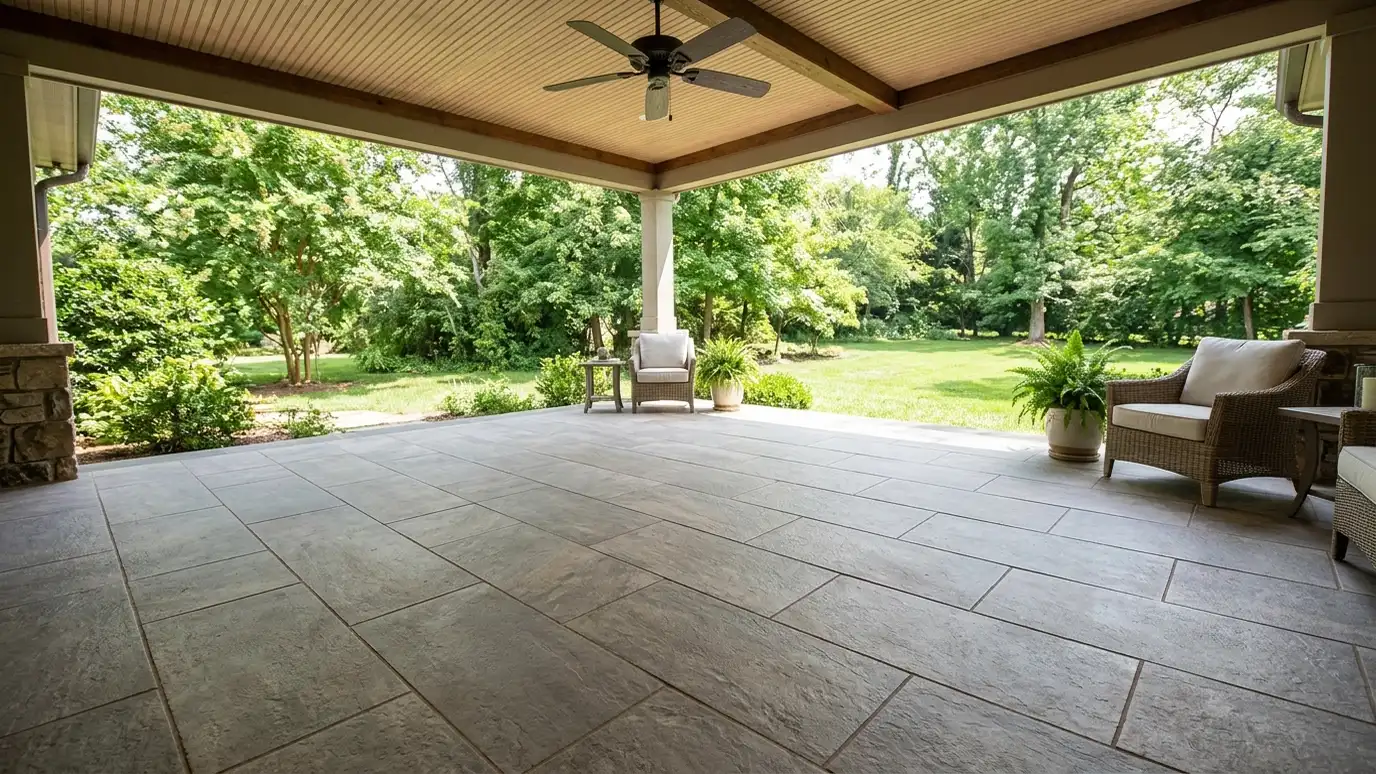
Dense porcelain with very low water absorption resists freezing and staining. Check that the tile is rated for outdoor use.
Textured finishes add grip when wet.
Light colors stay cooler under sun.
Plan the slope
Water must drain away from the house and off the surface. A gentle slope, often about a quarter inch per foot, is common.
Standing water is hard on tile, grout and slabs.
We check slope before setting.
Include movement joints
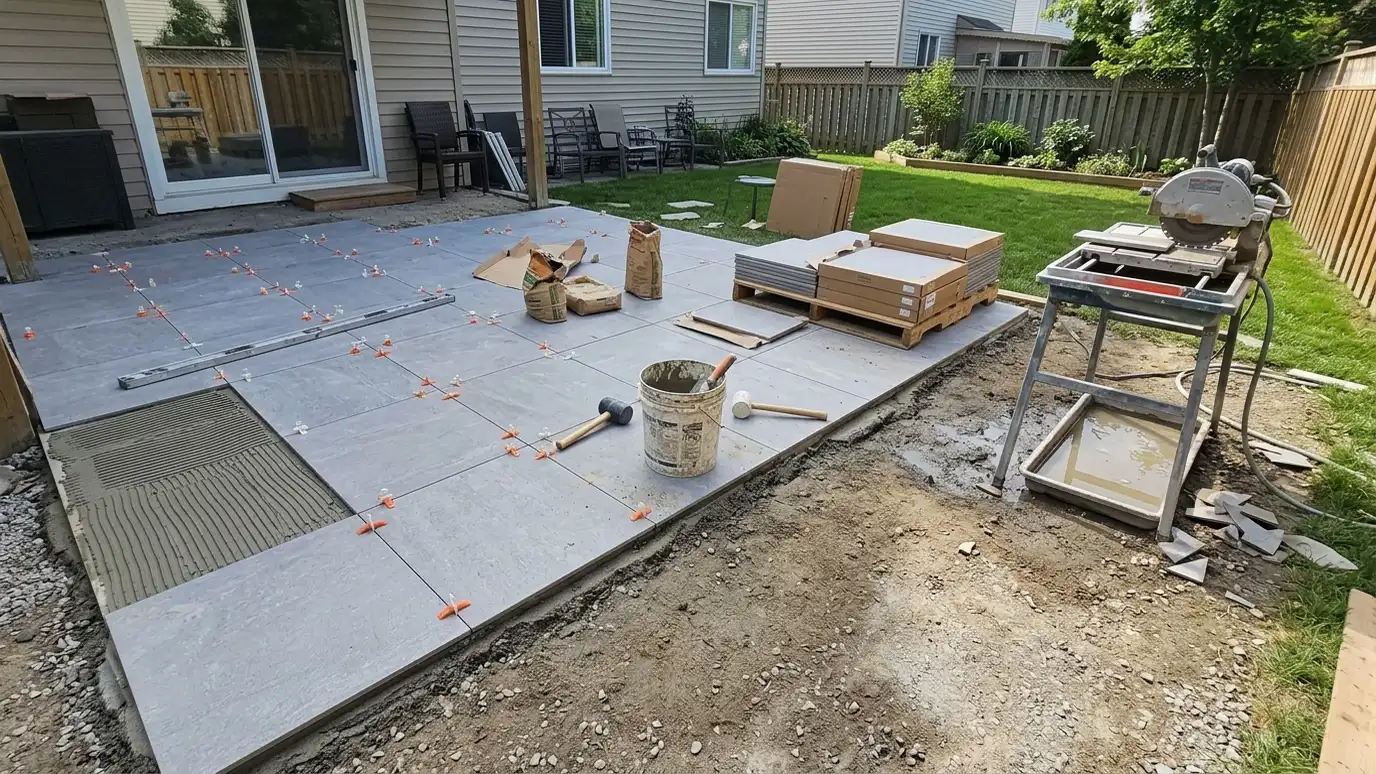
Large areas expand and shrink with temperature. Movement joints and flexible sealant at edges prevent cracks.
Joints follow the slab joints below.
They are planned, not an afterthought.
Use the right materials
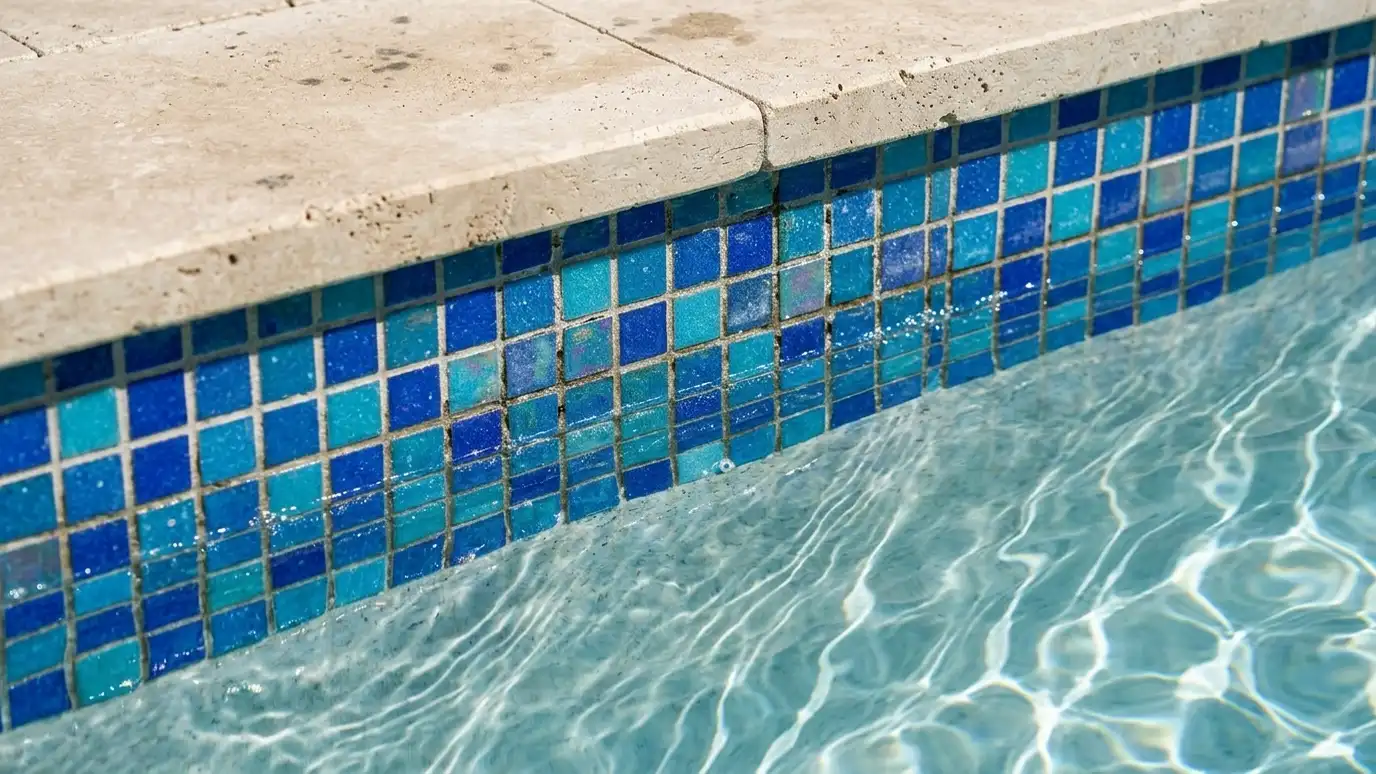
Outdoor mortars and grouts are made for moisture and freeze-thaw cycles. A sound slab and a crack isolation layer help.
Epoxy grout resists stains around grills.
Sealing choices depend on the tile.
Think about safety
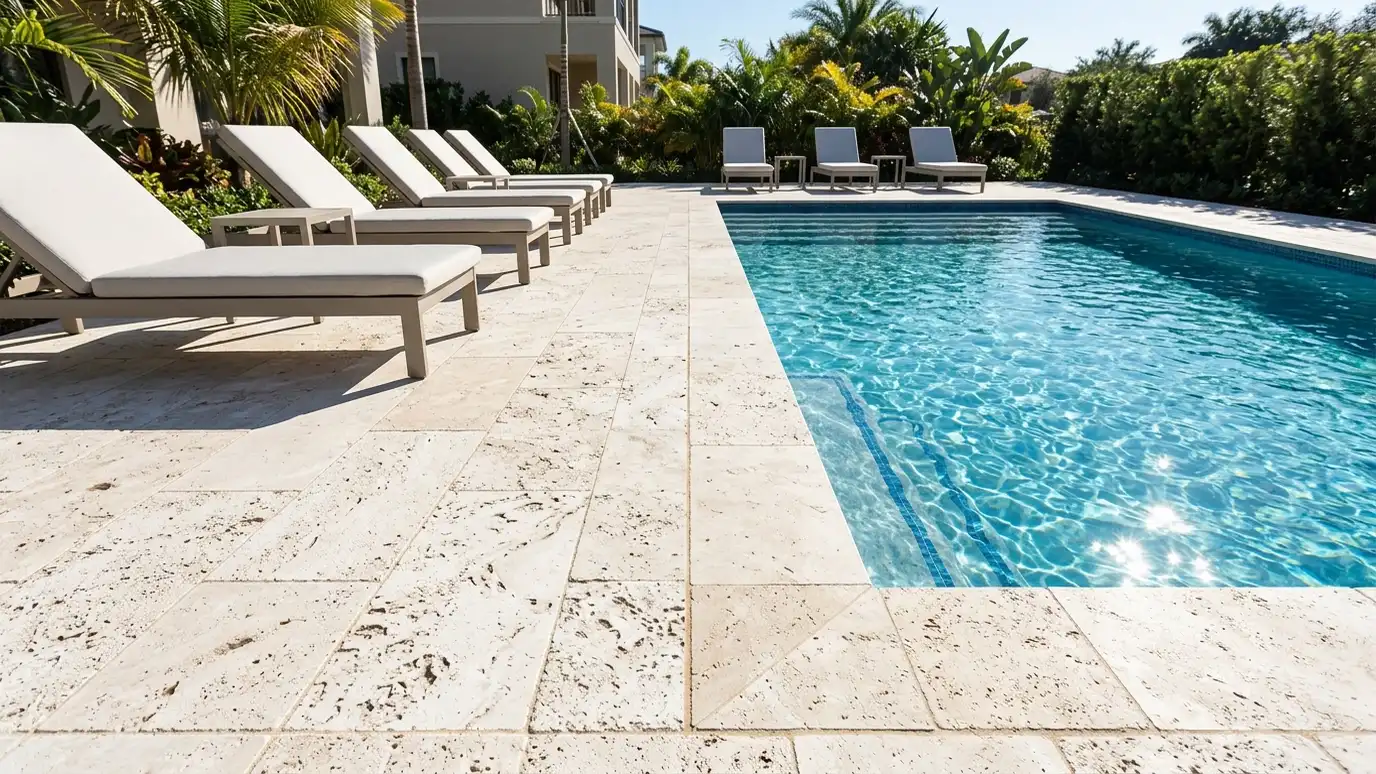
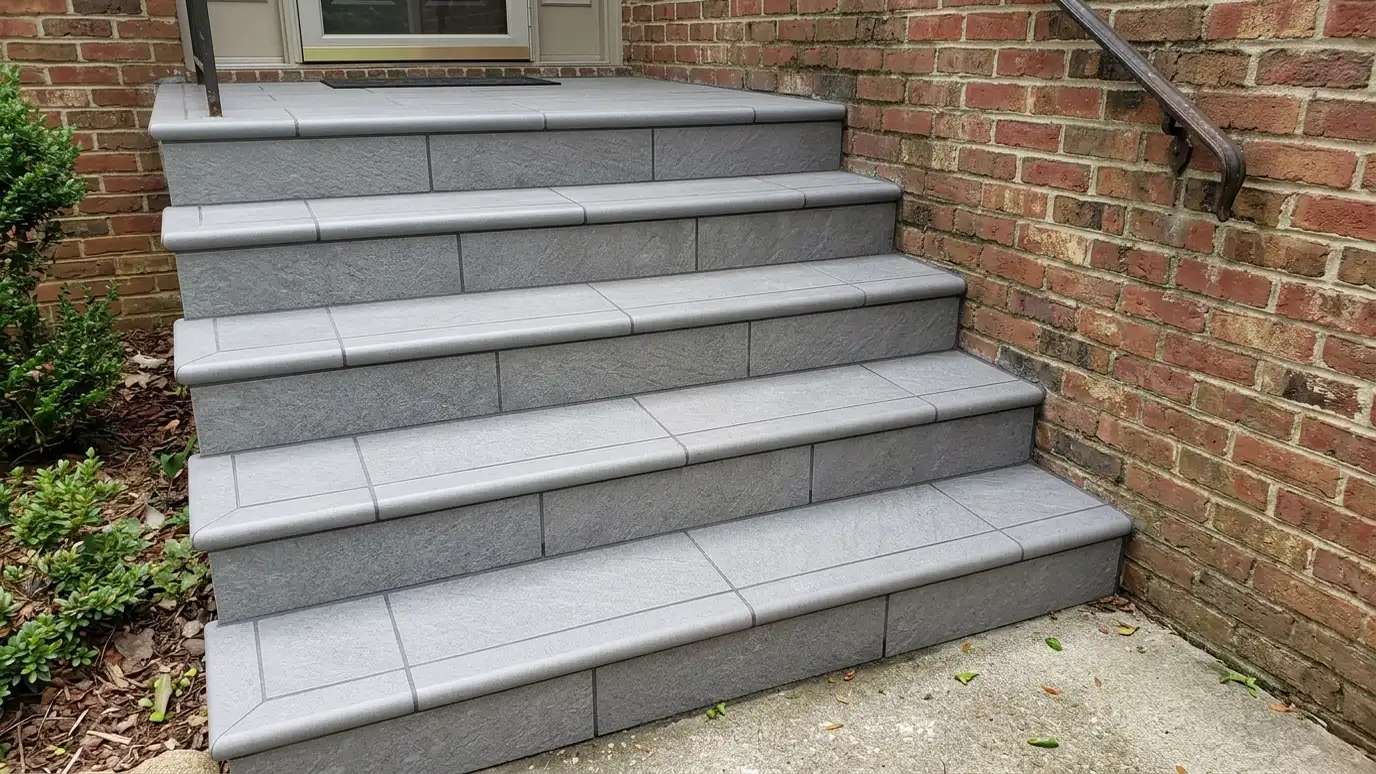
Pool decks, steps and wet entries need traction. Edges and nosings need to be clear and even.
Check traction ratings and test samples wet.
Plan lighting for steps.
Care through seasons
Sweep leaves, wash gently and keep drains clear. Avoid harsh deicers on some tile and stone.
Check grout and sealant each spring.
Fix small problems early.
Outdoor tile succeeds on drainage, movement joints and traction, so plan those before choosing a color.