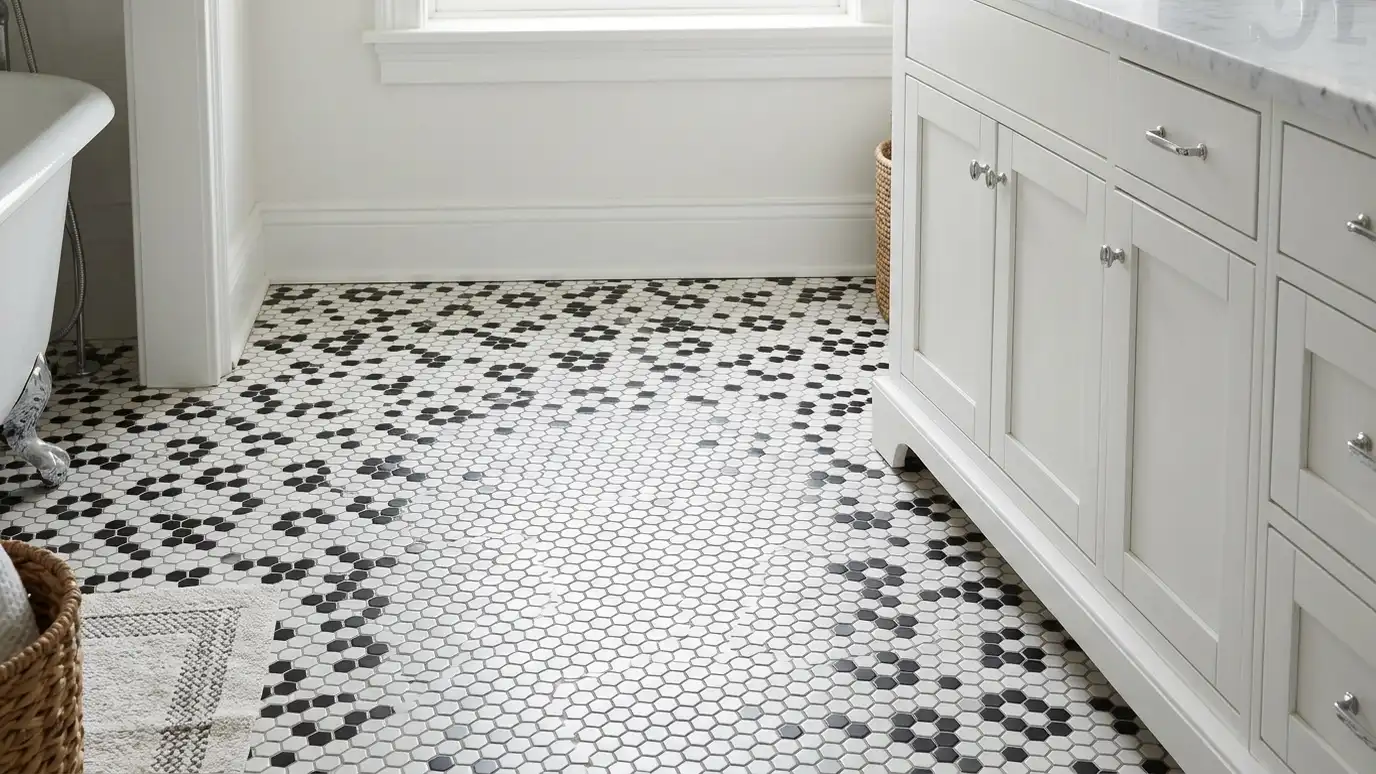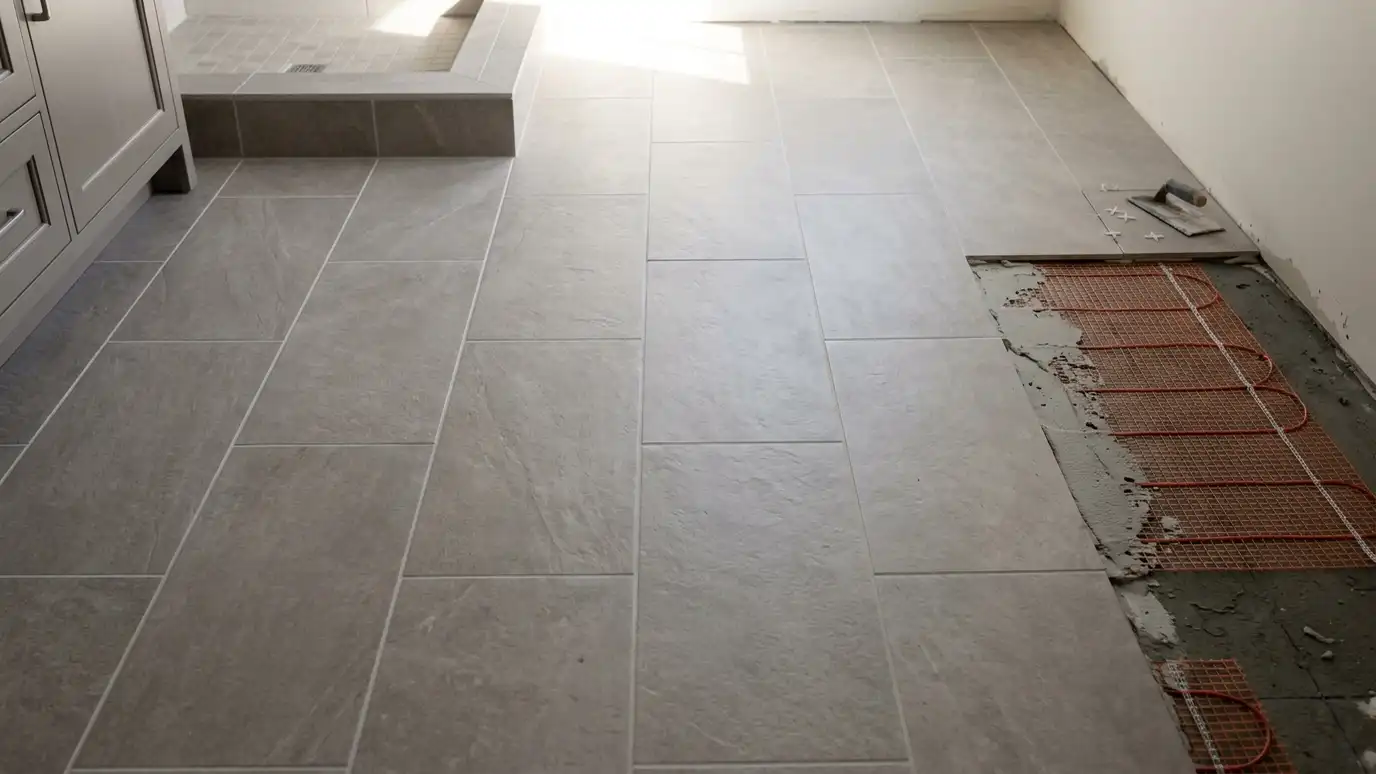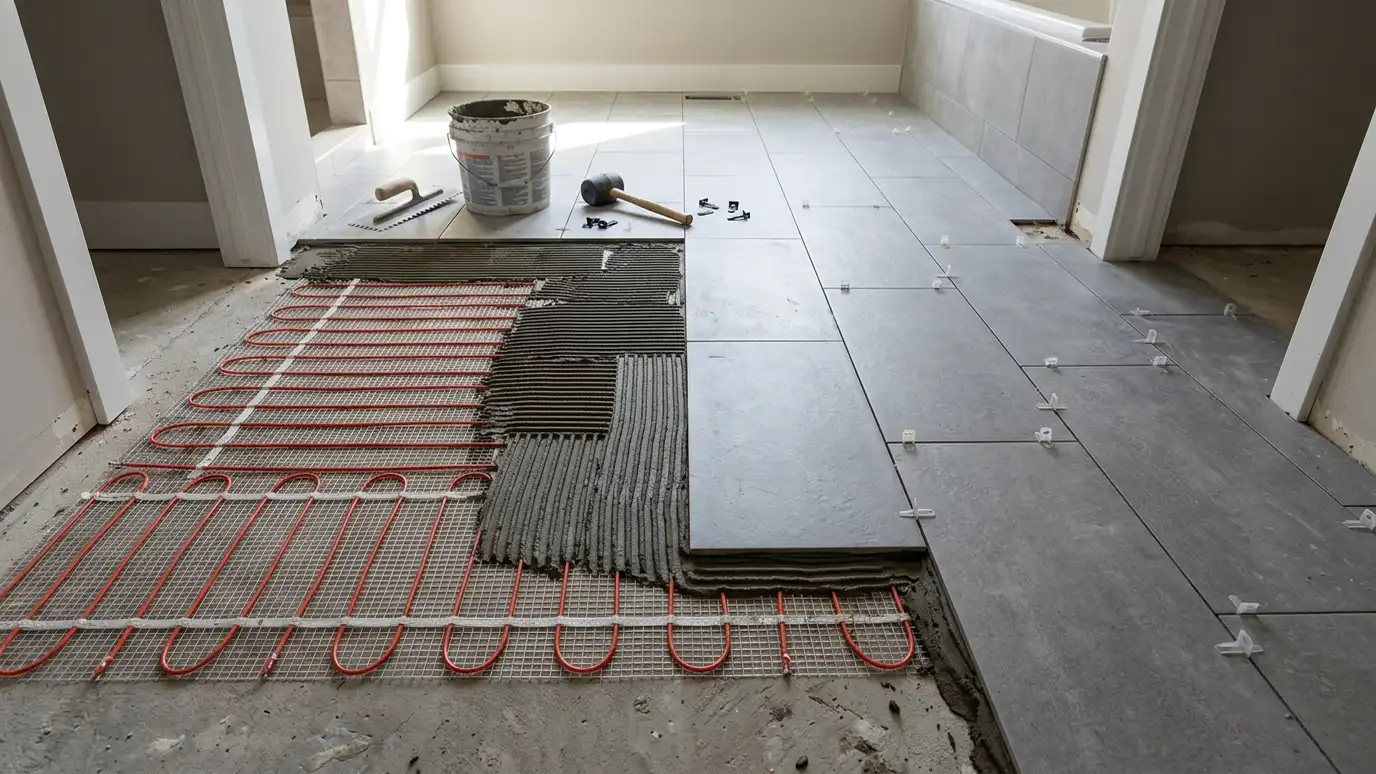
How electric mats and cables warm a tile floor, what a thermostat and sensor do and what to plan before tile is set.
Radiant heat under tile uses a thin electric mat or cable set in the layer under the tile. A thermostat with a floor sensor controls the temperature, and a qualified electrician connects the system to power. Because tile conducts heat well, the floor warms evenly and the room feels comfortable at a lower air temperature. Heat is most often added in bathrooms, kitchens and entries.
The key is planning. Heat has to go in before tile, mapped around fixtures so it warms where you stand and not under cabinets. The system is tested before and after tile is set, and the floor is prepared to protect the wiring. Homeowners in Nashville usually choose heat when they are already replacing the floor, because it is a modest addition at that stage. We coordinate with your electrician and explain how to use the controls.
Thin heating layers set under tile.
Controls temperature and schedules.
Reads the floor so it does not overheat.
Mapped around fixtures and cabinets.
Checked before and after tile.
A qualified electrician connects power.
Plan your layout, pick a size or ballpark a budget.
 Tile Layout StudioSet your room, pick a tile size and a pattern such as straight, offset, diagonal or herringbone and see a top-down plan with full and cut tiles, then send the plan to us.Try it
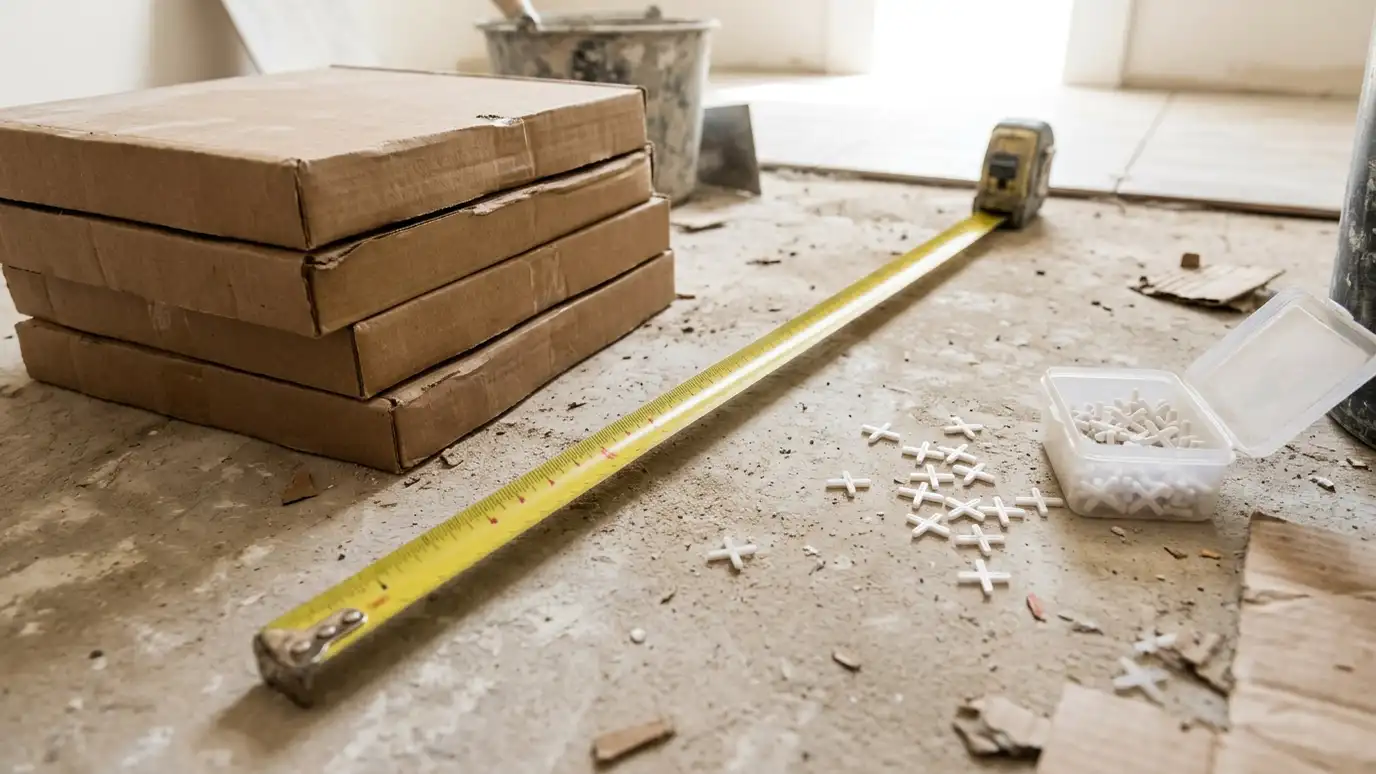 Tile Size and Format PickerPick the space and the conditions to see which tile format, grout joint and finish usually fit, with notes on flatness and grip.Try it
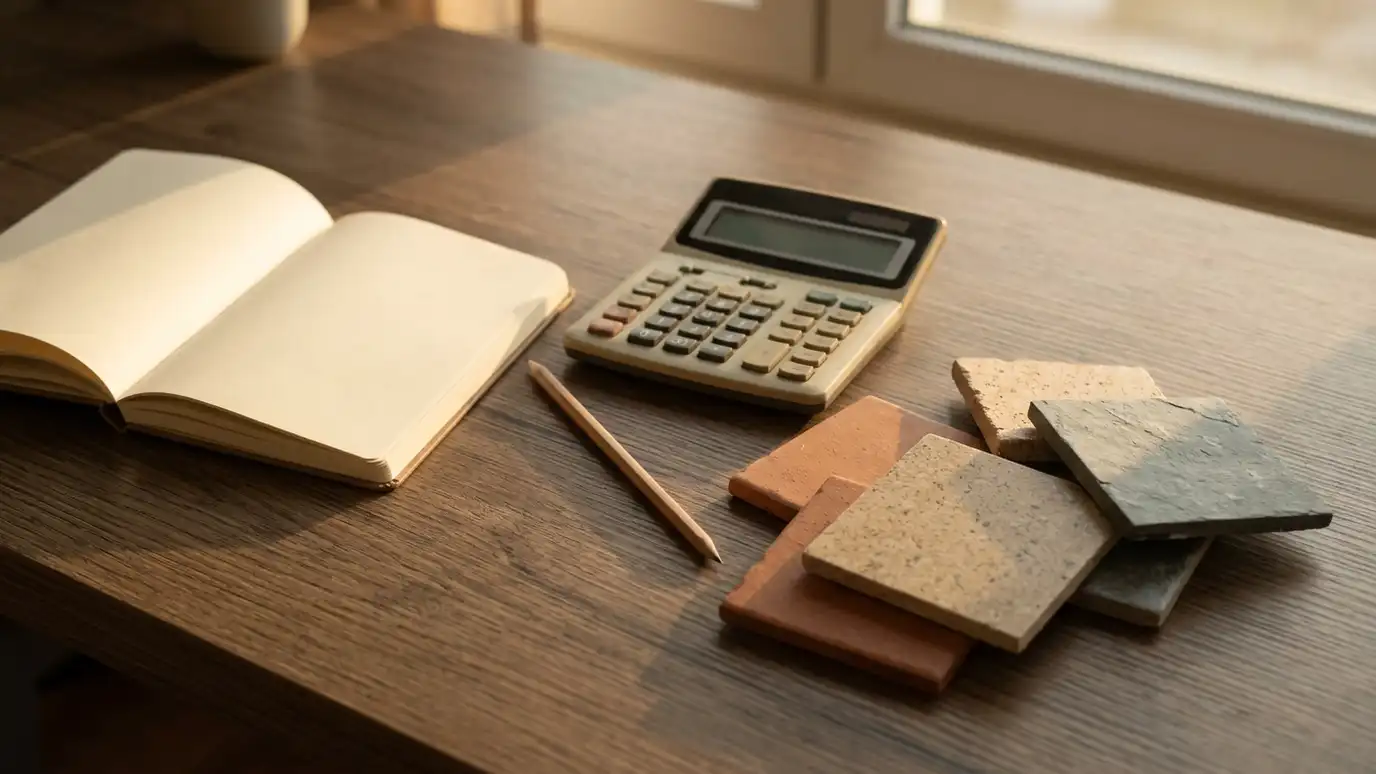 Tile Project Budget PlannerPick a shower, floor, backsplash, patio or repair project, set the area and add allowances like leveling, waterproofing and heated floors to see a ballpark planning range. Placeholder values only.Try it
Not easily. Heat goes under the tile, so it is best added when the floor is replaced.
Tile handles gentle radiant heat well when installed as the maker directs.
Cost depends on size, insulation and settings. A thermostat helps you control it.
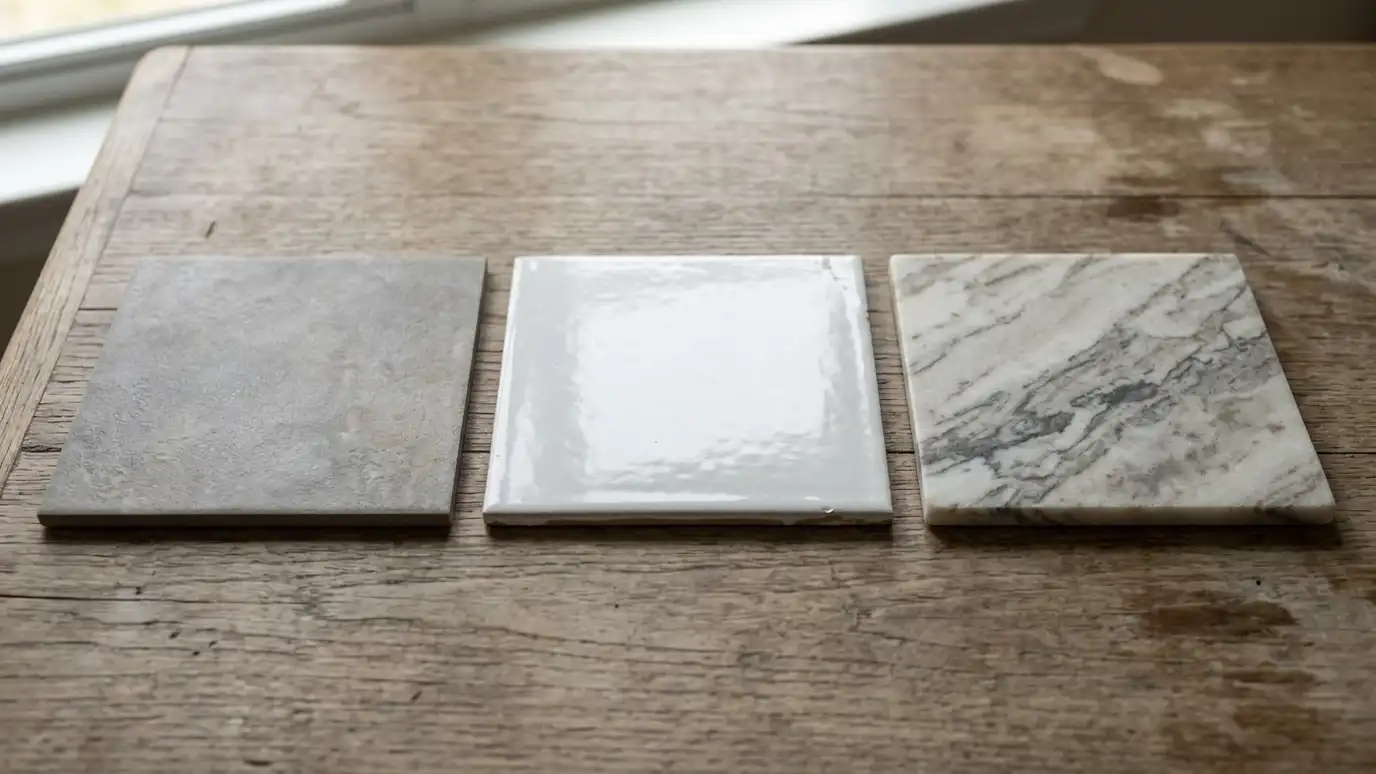 Comparison guidePorcelain, Ceramic and StoneHow the three main tile families differ in density, water absorption, wear, care and the looks they offer.Learn more
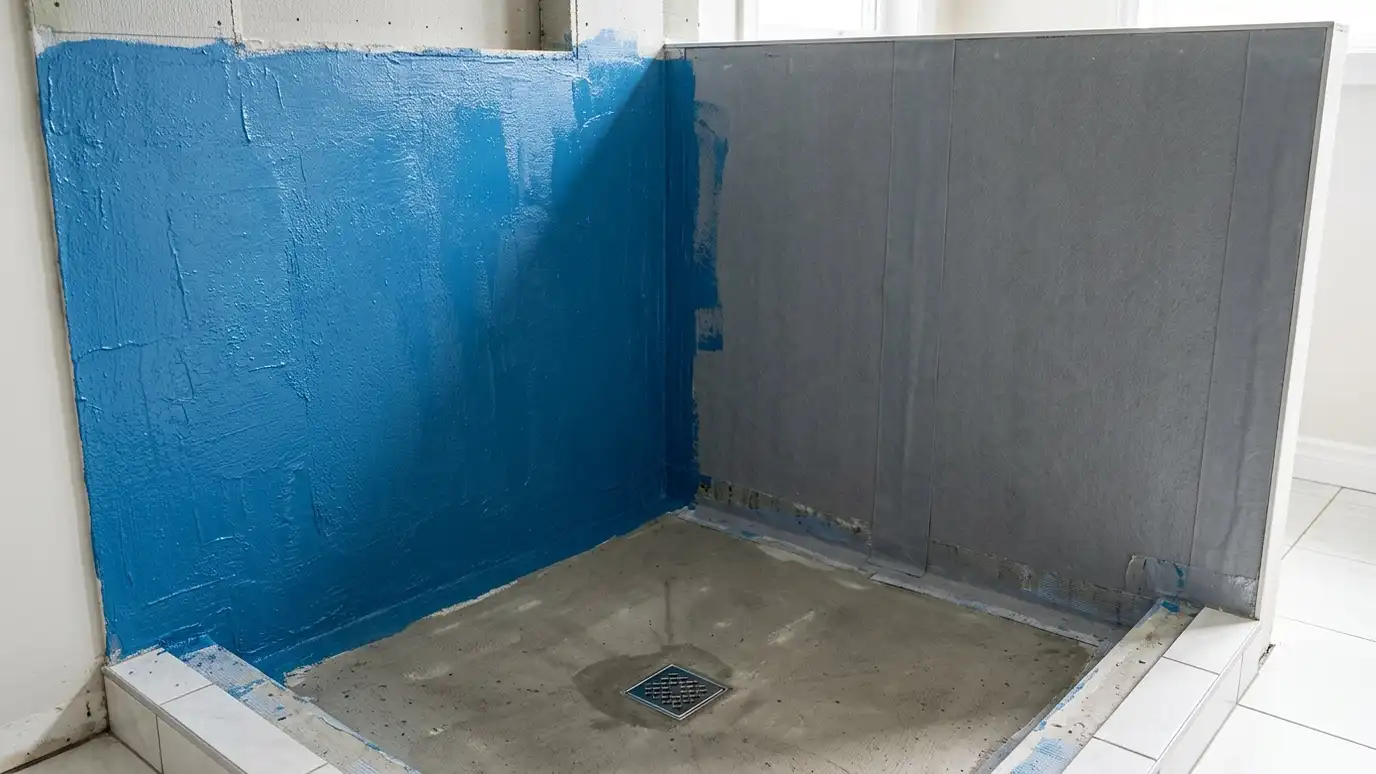 Comparison guideShower Waterproofing ComparedHow sheet membranes, liquid membranes and traditional liners differ in installation, details and what each asks of the…Learn more
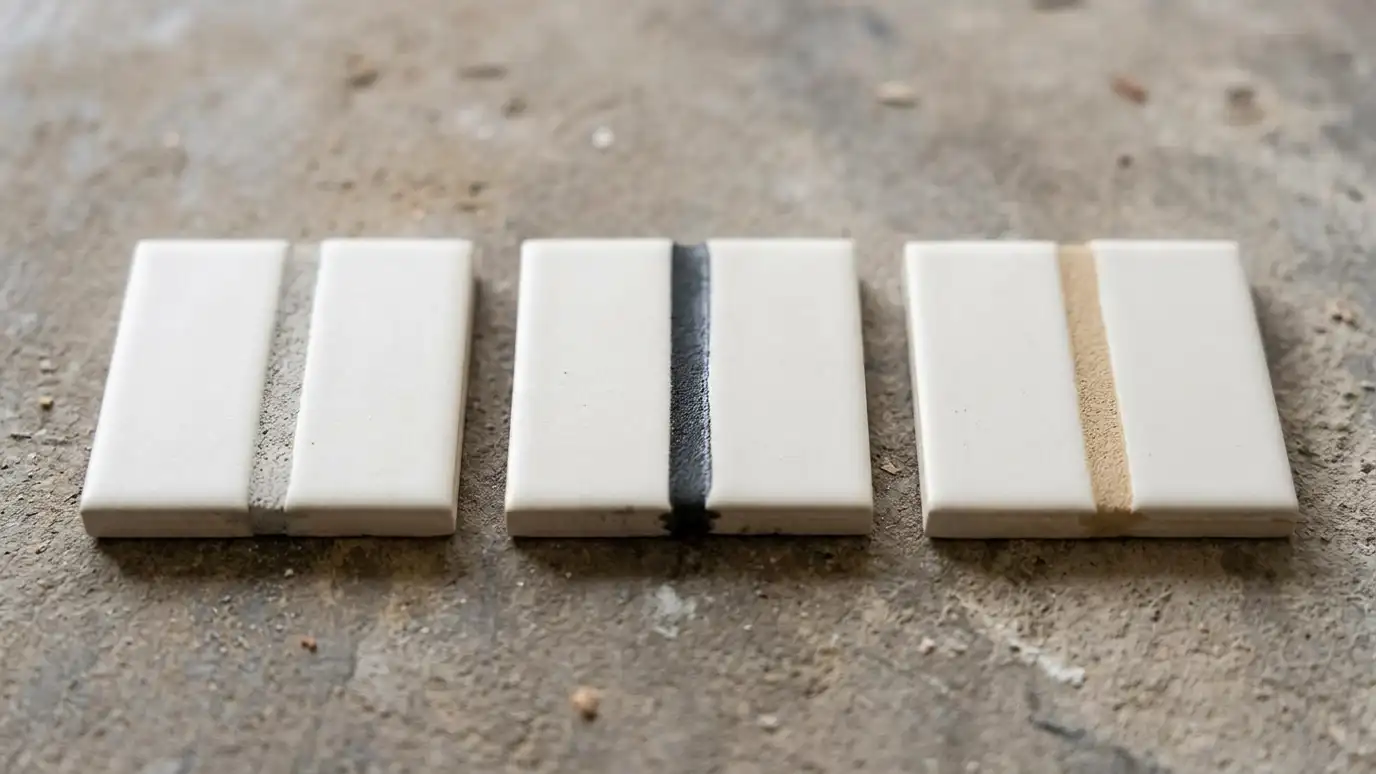 Comparison guideGrout Types ComparedHow cement-based, epoxy and urethane grouts differ in stain resistance, flexibility, color, working time and cost of care.Learn more
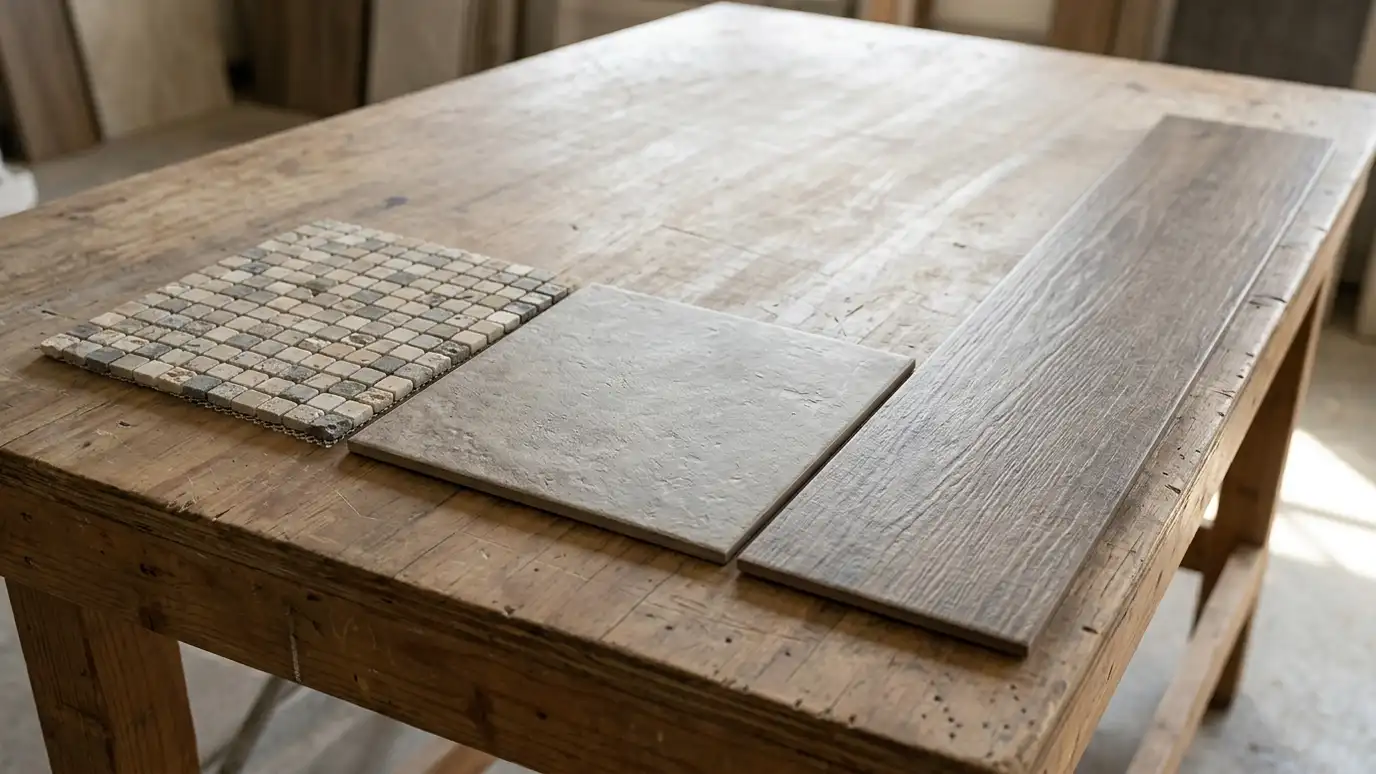 Comparison guideTile Size and Grout LinesHow mosaics, standard tile and large-format tile change the look, the grout lines, the installation and the cleaning.Learn more
Call us and describe your project. We will measure, check the surfaces and give you a clear written estimate.